
Welcome
Dear Faculty,
We are well into on what is proving to be a dynamic year. If 2025 (not to mention these few weeks of 2026), were any indication, the next 11 months will be ones of tremendous opportunity and complex challenges. Already, we have celebrated new honors, new programs and new major gifts. At the same time, we also navigate challenging news for higher education from the government, sector watch dogs and others. Just open a copy of The Chronicle of Higher Education for any number of examples.
In the midst of the highs and the not-so-highs, we continued serving our students and seeking new, innovative ways to deliver the transformative, Catholic education that we promise. So, it was especially timely that in a season such as this, our American-born Holy Father, Pope Leo XIV, offered us his perspective on the critical work that we do.
Like many of you, I have been reflecting heavily on Pope Leo XIV’s Apostolic Letter “Drawing New Maps of Hope” since it was published late last fall. Written to mark the 60th anniversary of the publication of Pope Paul VI’s Gravissimum educationis, which outlined the vital importance of education and the Church’s role in its progress, Leo’s encyclical offers homage to the historical relationship between Church and “school” but also shares a directive for the path forward.
He writes:
Where educational communities allow themselves to be guided by the word of Christ, they do not retreat, but are revitalized; they do not build walls, but bridges. They respond with creativity, opening up new possibilities for the transmission of knowledge and meaning in schools, universities, professional and civic training, school and youth ministry, and research, because the Gospel does not grow old but makes “all things new” (Rev 21:5).
There is much to consider in Leo’s letter, and much that resonates with the work that we do at the University of the Incarnate Word, from its depiction of the charism of our founding congregation as a guide, to our duty to provide accessible education, to the need for inter-disciplinary and cross-disciplinary endeavors. I find myself returning again and again to the idea of “educational constellations” in which every point of Catholic education, be it a parish school, a training program or a university, constitutes a star. Stars shine individually but together are infinitely more illuminating. And, in the words of Pope Leo, “the future demands that we learn to collaborate more and grow together.”
I have spoken to you this year about our search for opportunities, our examination of the future through the lens of possibility, and our need to continually transform so that we may keep pace with the needs of our students, the sector and the world. How timely and how right that we receive this message now.
We are forming a constellation. The critical interdisciplinary opportunities formed across schools and colleges, especially those expressed in service-learning, are proof of this. Further evidence is found in the outcomes of the collaborative endeavors forged with Mission-centered partners. Just look to the Pastoral Institute, the Ettling Center for Civic Leadership and Sustainability, or the Texas Institute for Graduate Medical Education and Research (TIGMER).
In this critical year of transition, as we continue toward the development of our coming Strategic Plan, as we move forward toward classes starting in Founders Hall in fall 2026, and as we continue to reach across disciplines and across borders to connect more meaningfully, one thing is clear: we work best together, inclusively. Your contributions are critical to this work. I thank you for all that you bring to our university, especially your continued prioritization of Mission-integration and academic excellence.
Renewing a Shared Commitment to Mission
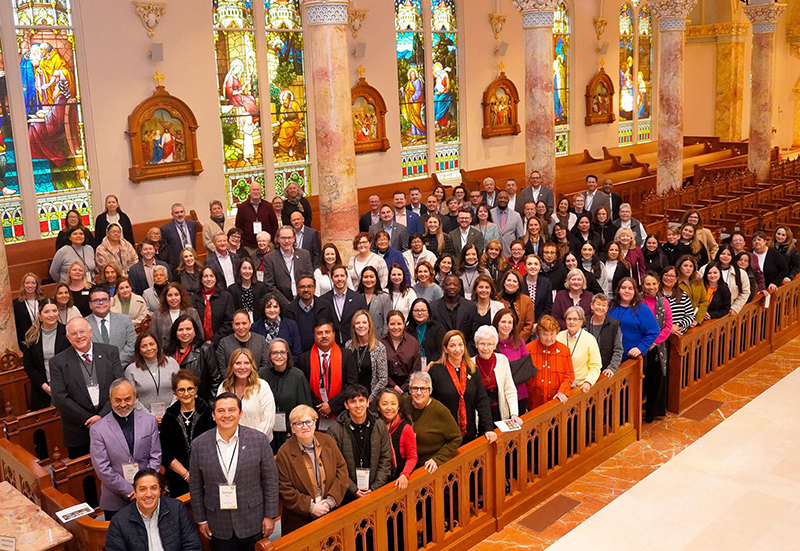 This year began with a deep focus on Mission and the roots of our institution. In early January, the Sisters of Charity of the Incarnate Word convened lay leaders of their 25 global ministries in a fully dual-language summit called “Responding to the Call” held on our Broadway Campus. The gathering was a deeply significant moment for all of us who work to sustain a ministry of the Sisters. The UIW contingent included one dean or faculty member from each academic school, the rectors of UIW Campus Bajío and Centro Universitario Incarnate Word, and several members of our leadership and administration.
Together, we reflected on and renewed a shared commitment to Mission. Throughout the multi-day event, we considered the roles that each ministry plays in bringing to life the charism of the Sisters in different ways. Organizers dubbed all of us who do this work “charism carriers.” We explored the future of education, social justice, healthcare, what it means to build a Mission-based culture, leading during times of great change, and more.
Among the outcomes that emerged was the clear need for the ministries to work together to a greater and more meaningful extent. These are the nearest stars in our constellation and we will be drawing stronger lines to one another.
I thank each for their participation and commitment to discovering how we can continue carrying the charism of our founders alongside our sister ministries. I look forward to sharing developing outcomes of this gathering with you.
A Growing Constellation
As Pope Leo challenges us to look forward and innovate, we must consider how Catholic education can be a “laboratory of discernment, pedagogical innovation and prophetic witness. Drawing new maps of hope: this is the urgency of the mandate.”
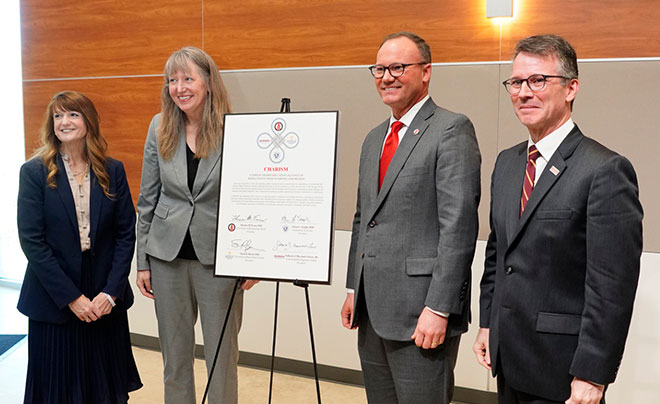 In December, I was proud to stand before you with my colleagues, Glena Temple, PhD, president of Dominican University, Susan Burns, PhD, president of University of Mount Saint Vincent, and Gilberto Marxuach Torrós, JD, president of Universidad del Sagrado Corazón, to announce our new alliance. CHARISM: Catholic Higher Education Alliance of Rising Institutions in Service and Mission brings together our institutions to create new pathways and broaden academic opportunities for our students that enrich their professional preparation and expand their perspectives. These include study-away experiences, pathways to continued education at one another’s institutions and via our campuses in Mexico, and more. Faculty, too, can benefit from our alliance through collaborative research, co-teaching and faculty exchange.
Since that December announcement, faculty, administrators and my fellow CHARISM presidents and I have been drafting plans and identifying the right opportunities. Below are some of the most recent that reflect the diversity of programmatic integration and breadth of impact on students and faculty.
- A signed statement of work for students to participate in study away experiences. Among the first is a trip to Guatemala integrating Nursing and Public Health students from all four CHARISM institutions. Planned for fall 2026, the trip encourages students to learn from one another as they participate in their clinical rotations.
- The School of Rehabilitation Sciences will host health sciences students from Universidad del Sagrado Corazón for a summer immersion experience.
- Multiple Collaborative Online International Learning (COIL) projects are underway that across UIW’s health professions and humanities disciplines in the U.S. and Mexico campuses and our partner institutions.
- Faculty are also sharing their expertise with their peers at CHARISM institutions. In December, Dr. Dennis R. Román Roa, dean of Sagrado Corazón’s School of Business, presented to a group of faculty from UIW’s U.S. and Mexico campuses during a workshop on greater cross-campus collaboration.
- LuElla D’Amico, PhD, associate professor of English at UIW, and Fr. Yamil Samalot-Rivera, OP, of Sagrado Corazón are leading a new phase of collaboration focused on how the humanities advance the mission of Catholic higher education. Multiple activations begin this semester and include a Zoom lecture from Fr. Samalot, a lecture from Dr. D’Amico at Sagrado Corazon, and a faculty development meeting between the two institutions on teaching in “Catholic Imagination” and related humanities courses.
- This year’s Faculty Endowment Research Award (FERA) application includes an option specifically designed to support relationship-building and early-stage collaborative work with CHARISM partners.
I am inspired by how much progress has been made, how many across our institutions are taking part in this endeavor, and how quickly it is coming together. Inside Higher Ed caught up with me and my colleagues when we gathered at Sagrado Corazón’s campus in San Juan in January to discuss future plans. The resulting piece did a wonderful job of articulating the alliance’s genesis and the potential that we see in working together. I share the article with you here: A New Catholic HSI Alliance.
Strategic Planning 2031
 Progress toward the development of our next Strategic Plan continues as you will see in the bulleted updates below. As I have shared previously, strategic planning is an inclusive endeavor requiring the input and perspectives of many across our system in a variety of ways. I share my gratitude to the members of our Strategic Planning Task Force (SPTF) for leading this work and to the three subcommittees for their collaboration and contributions to defining priorities within their focus areas.
- In fall, many of you participated in the Strategic Planning Survey shared by SPTF chairs John Bury, Vice President for Strategy & Enrollment, and Michael Larkin, Chief of Staff, which sought your input into themes emerging from SPTF work. Prior to the holiday break, survey results were shared with you.
- In January, the Faculty Senate hosted a faculty gathering designed to engage you in discussion and to solicit your feedback into the themes emerging from the strategic planning process. Your feedback was then provided to the SPTF for review and discussion.
- Currently, subcommittees are shaping draft goals that will be considered by the SPTF. Once refined, draft goals will be presented to the Board of Trustees at their April retreat, which will be attended by all members of the SPTF, and again in June.
Strategic Priority Update
Priority Spotlight: Make UIW a premier provider of educational services to men and women of the military and veterans
 We are very proud of the work being done on behalf of our military-affiliated community. Tila Jernigan, Senior Director of Military and Veterans Affairs, is leading the strategic priority committee that continues to make strides toward better serving our military and veteran students and their UIW experience. Among some of the most recent developments include:
- Establishment of Military Education Coordinators at Joint Base San Antonio (Ft. Sam Houston, Randolph Air Force Base and Lackland Air Force Base), who support military-connected students’ admissions, advising and registration needs.
- Beginning January 2026, UIW entered into a three-year contract at Fort Sam Houston to provide additional general education to military students pursuing RadTech (radiologic technology) certification. At the completion of just additional six hours of liberal arts credits, students will have also attained an Associate’s degree.
- In November, UIW again received a third consecutive honor as a best college for veterans in the nation by the Military Times’ “Best for Vets: Colleges” ranking.
- This month, U.S. News & World Report recognized UIW in its Best Online Bachelor's Programs for Veterans ranking.
- In April, UIW will be hosting the second annual Moral Leadership Symposium that brings members of the U.S. Army Chaplains Corp and military leaders to the Broadway campus for a multi-day conference. Presentations and panel discussions will explore issues of ethics, faith, leadership and integrity, to name a few. I encourage you to take part. Information will be shared through campus screens and via the Word Today daily newsletter.
Priority Spotlight: Improve UIW’s infrastructure of facilities, staffing levels and business processes
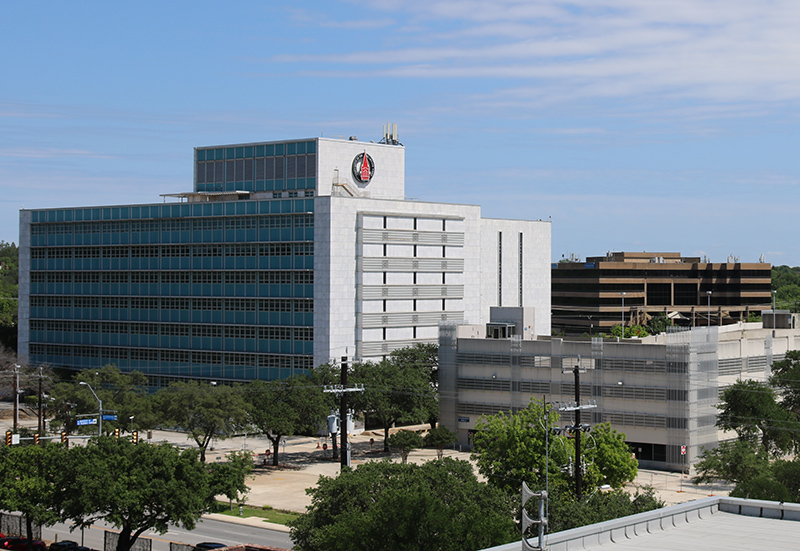
We are drawing closer and closer to fall 2026 when we will see Founders Hall come alive with the energy of our students, faculty and staff. Before we know it, it will be bustling with students, faculty members and administrators from such programs as Graphic Design, Mathematics, Communication Arts, 3D Animation and Game Design, Engineering, Computing and Cybersecurity, International Affairs, the Lewis Center of the Americas, UIW Police, Heath Services, Shipping and Receiving, and more.
In this phase of the building’s renovation, we have focused on the first four floors, which house a diversity of spaces from new classrooms and labs, to areas for collaborative work, to event spaces welcoming all. The upper-level floors will be completed in coming years.
Throughout the spring and summer, we can anticipate even more movement and activity as the final details come into place. Substantial completion of the project is expected to be reached soon. Later this spring, the first occupants will begin moving into their spaces.
I have shared updates regarding our renovation in previous special messages and videos, and you can expect to hear more throughout the semester. We are working to share updates with our broader community and prospective students. Celebratory events are in the works, so please stand by for those announcements as we move into the end of the semester.