

Recognizing the Value of a Catholic Education: UIW Hosts 10th Annual Bernadette O’Connor Lecture on Catholic Intellectual Traditions
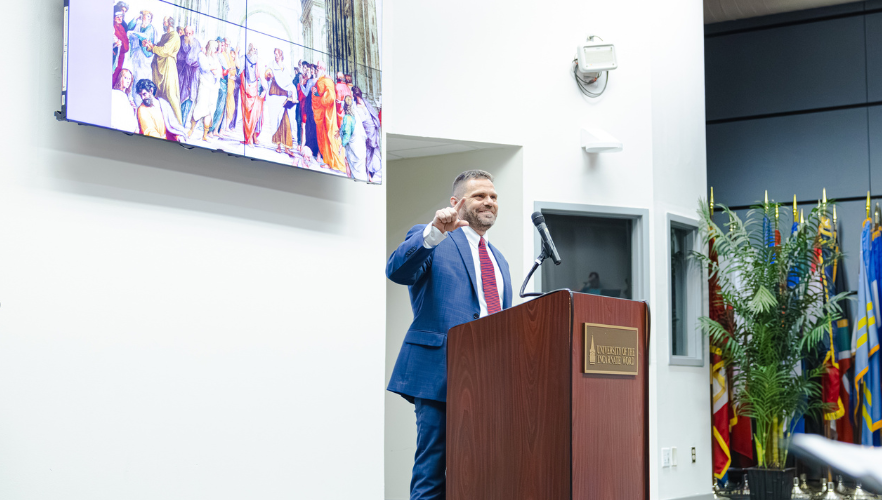
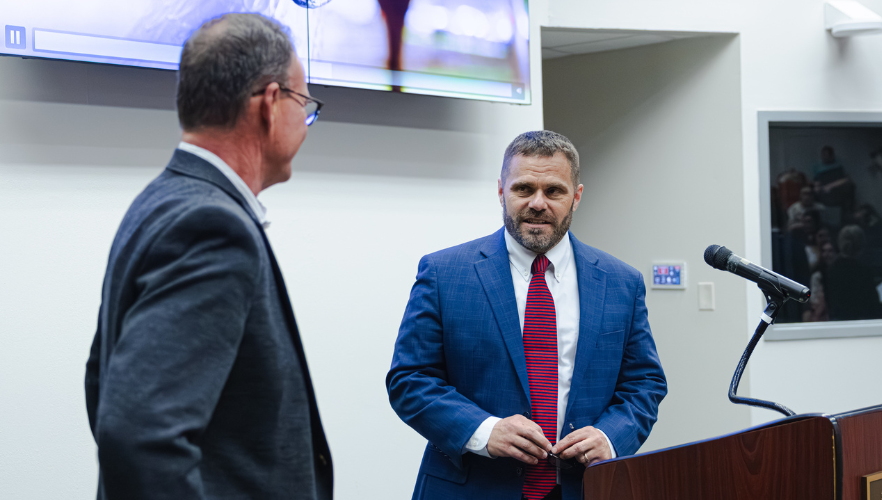
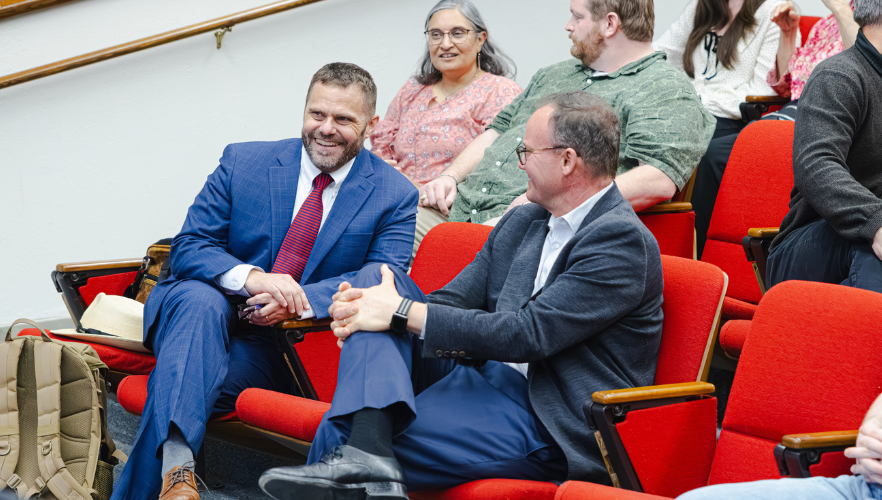
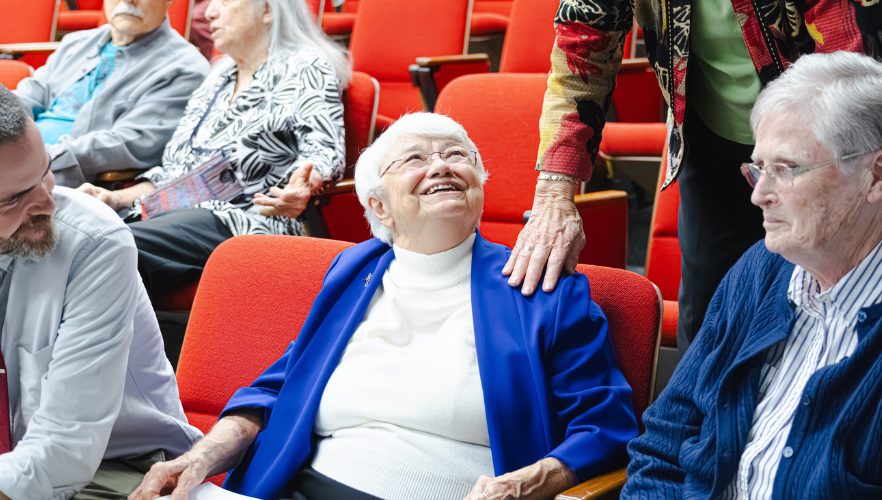
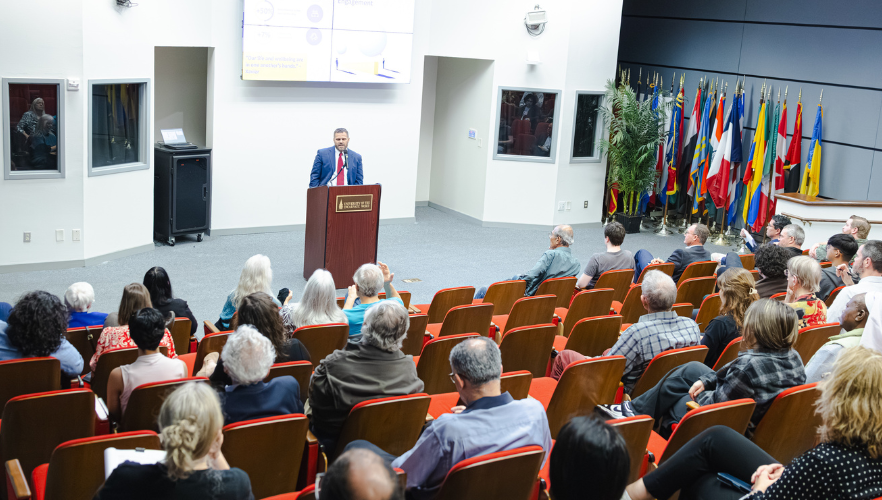
On Monday, Feb. 9, UIW’s College of Humanities, Arts and Social Sciences (CHASS) hosted the annual Bernadette O’Connor Lecture on Catholic Intellectual Traditions (CIT), with this year’s presentation exploring the positive impact that a Catholic education can have within the lives of its students.
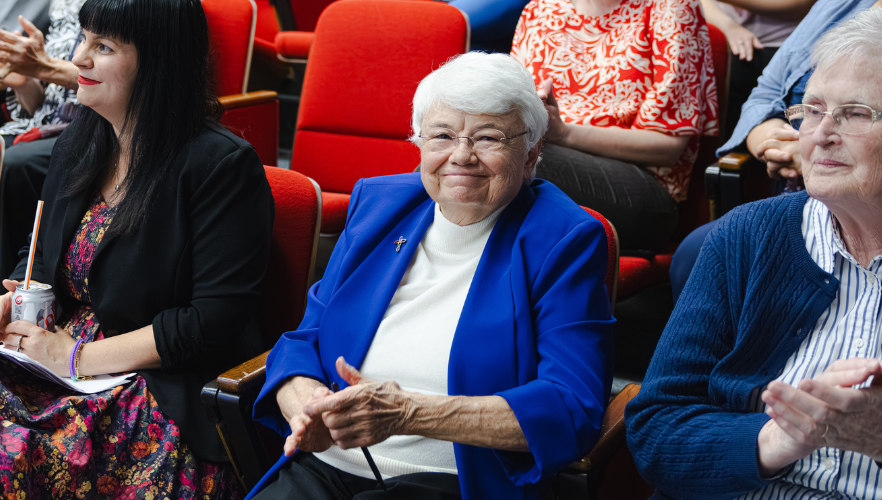
Since 2017, this lecture, named after former Dean of CHASS and Professor of Philosophy Bernadette O’Connor, has sought to engage some facet of the CIT, most broadly understood as the dynamic and mutually illuminating conversation between the Catholic faith and human culture. O’Connor herself joined for the evening’s lecture, featuring this year’s guest speaker, Jason King, PhD, Beirne chair & director of the Center for Catholic Studies at St. Mary’s University, as he shared his presentation titled "Does Catholic Education Make a Difference?”
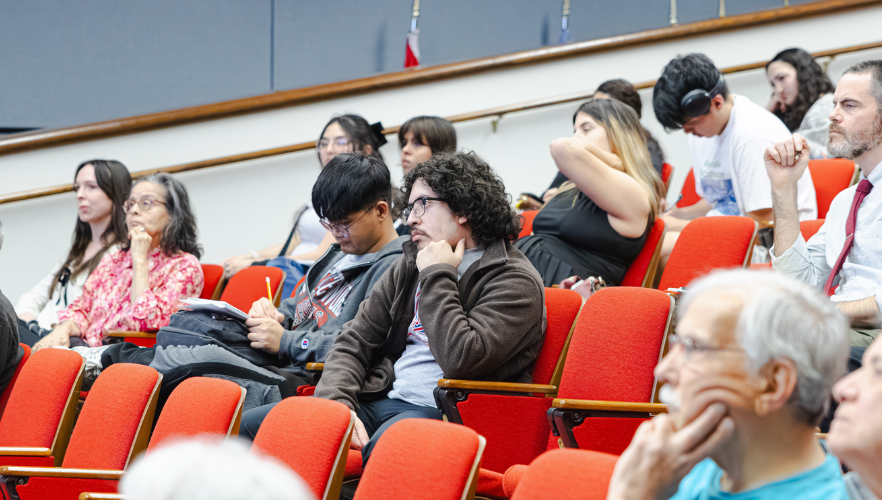
This year’s lecture held special significance as it marked the 10th anniversary of the series. Students, faculty, staff, and the Sisters of Charity of the Incarnate Word gathered in the Grossman International Conference Center alongside university leadership, including Vice President of Mission and Ministry Sr. Walter Maher, CCVI, Provost Eva Fernández, PhD, and President Thomas M. Evans, PhD, to commemorate the milestone and take part in the celebration.
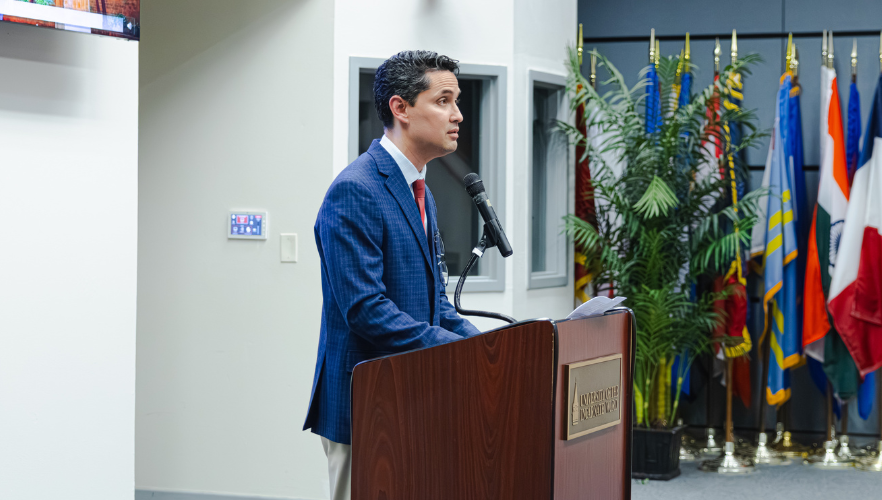
“Today, Dr. King is addressing questions vital for all universities, concerning the value of education that can be offered to students today,” opened Director of the UIW Pastoral Institute and CHASS Associate Professor Michael Romero, PhD. “I think that his research also allows faculty and administrators space to consider questions concerning the meaning of their own work in Catholic institutions. His unique contribution is based on his study of graduates of both Catholic institutions and graduates of non-faith-based institutions, who were asked about things like life, meaning and fulfillment.”
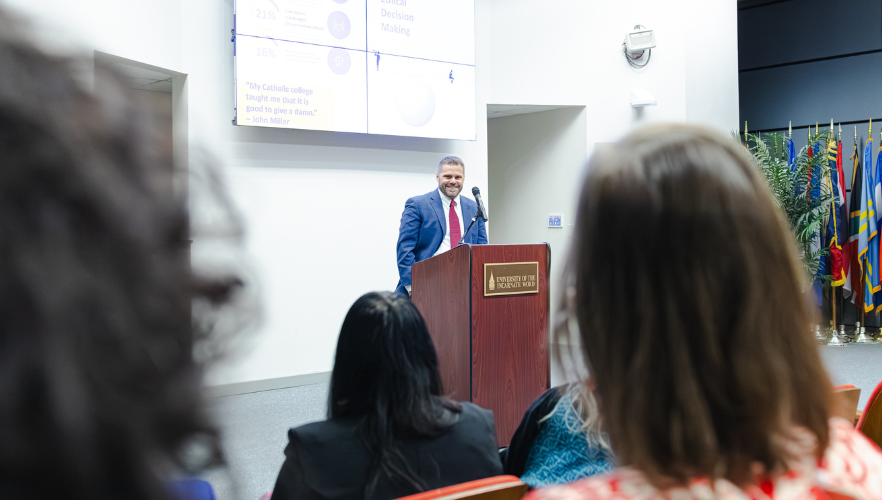
King was greeted with bright smiles and enthusiastic applause as he entered the room and approached the podium. He opened by reflecting on the growing debate surrounding the value of higher education, particularly Catholic higher education, a conversation often framed by concerns over rising costs and economic outcomes. Drawing from his experience as an educator, King noted that students share these worries firsthand, with many feeling anxious about choosing the “right” major and weighing the financial commitment of attending a Catholic college or university.
King consulted his colleagues and was eventually encouraged to do a study on the value of a Catholic education. It was apparent that articles at the time were only discussing the economic value of a Catholic education, but none explored beyond that. Curious about what other benefits can be had through a Catholic education, King and his colleague developed a study that sought to reveal more.
“When we did the 2024 study, and then we repeated in 2025, we asked non-financial questions to graduates about their college experience,” noted King. “We surveyed 2,000 people, 1,000 graduates from secular institutions and 1,000 graduates from Catholic institutions. We asked a whole bunch of demographic questions about age, gender, ethnicity, geography, voting patterns and religion. All of these pieces were to try to attend to the population and to make sure that the people that we were serving were representative of college graduates, and so that the comparisons we have would be reliable.”
King found that there were three major findings concerning the benefits of Catholic education:
- Meaningful Life: Student expressed that their lives were “close to ideal” and aligned with their values. Students found that a Catholic education broadened their perspectives on the possibilities that lie beyond college and careers. They had a high sense of satisfaction, fulfillment and purpose.
- Community Engagement: Students felt a responsibility to their neighbor, community and society. They often participated in volunteer work and got involved in various ways including donating goods, voting, giving blood, serving on school boards, engaged in environmental projects, etc.
- Ethical Decision Making: Students consider important values and subjects (inequality, suffering, loyalty, respect) when making decisions. Catholic education encouraged discussions on ethics, often leading students to tying their educations to how they make moral and ethical decisions.
King took these findings and added more questions during his 2025 study. Some questions looked further beyond college, as he recognized that the impact an education has doesn’t simply stop after graduation, but it influences beyond as students grow and experience multiple aspects of life. His additional findings included:
- Work and Vocation: Students experience satisfactory incomes, become homeowners, find their careers to be a meaningful calling and recognize how their work can serve others.
- Belonging and Mental Health: Students felt a sense of community, shared values with others at their school and often agreed that their college and/or university helped them to grow into the person they wanted to be. They also felt that they were satisfied with their mental health.
- Faith and Diversity: Students felt that their curriculum encouraged faith-based discussion, initiated conversations on different viewpoints. Additionally, they felt that they were exposed to a wide range of viewpoints that helped them to better perceive the world.
- The Use of AI: Students were more likely to use AI, as they felt that their education equipped them to use it. They also reported viewing AI as having a positive impact.
“I see these as kind of applications of that bigger view of the world, meaningful life, community engagement, ethical decision making,” recounted King during his presentation. “If this is the education that you're providing, it has these kinds of impacts on these particular issues. It (Catholic education) helps you to have a sense of your job, not just as money, but as a purpose. Your sense of who you are, not just as an isolated individual trying to live up to some external standards, but as a person who belongs to a community that has a strong sense of self. A sense of your own faith commitments, but not one that closes you off to exploration or that causes you to disrespect others around you. Even when new technologies emerge that are threatening to many of us, it helps you by giving you the confidence of how to approach these things intelligently, responsibly and think through them in a mature fashion.”