
Honoring the History and Impact of Catholic Healthcare: UIW Hosts 2026 Pierre Lecture
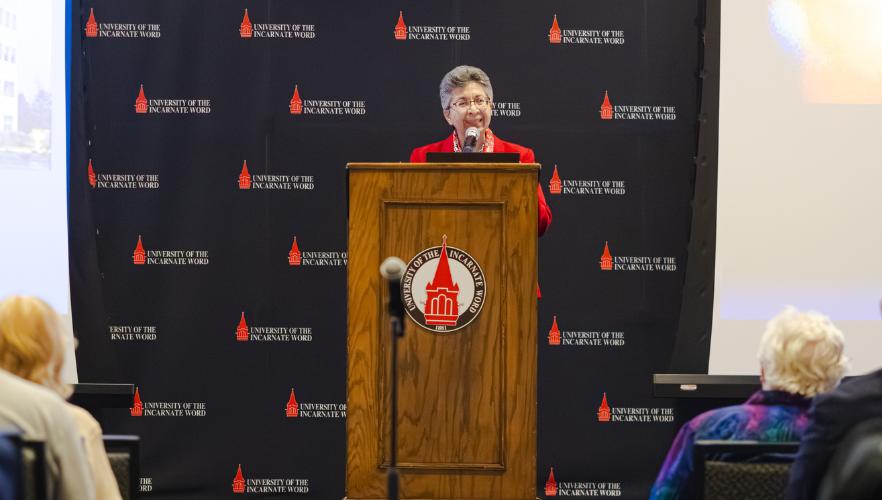
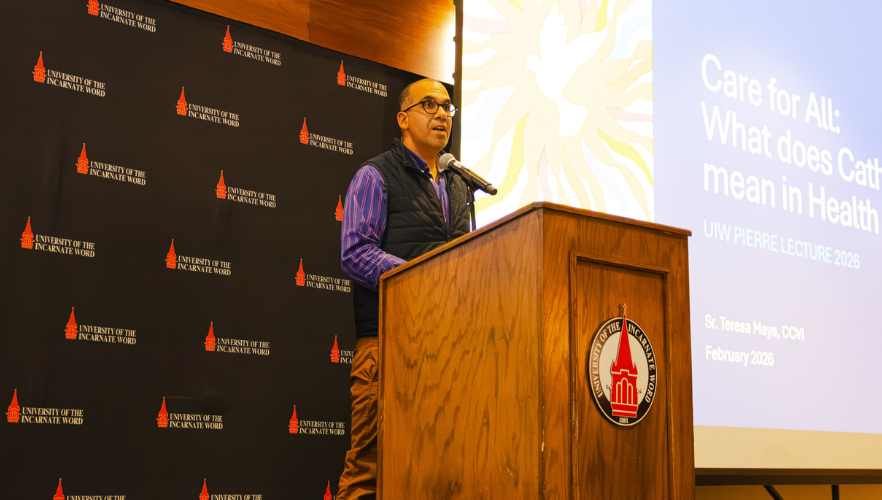
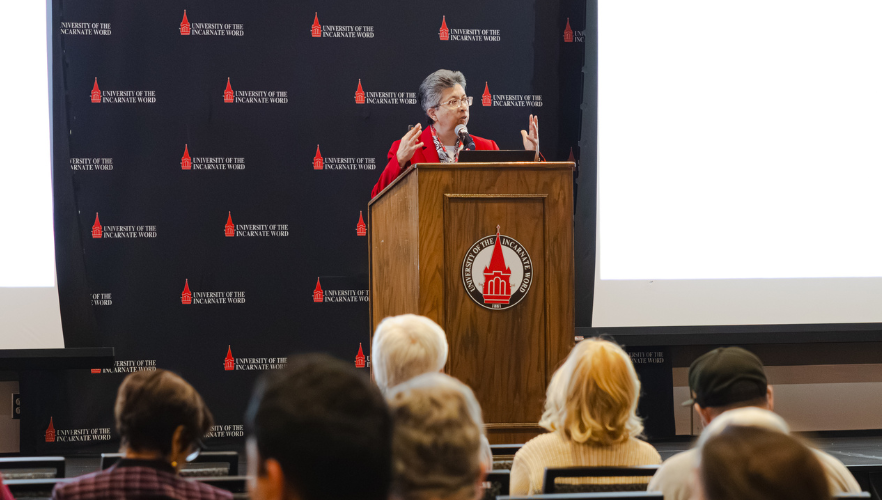
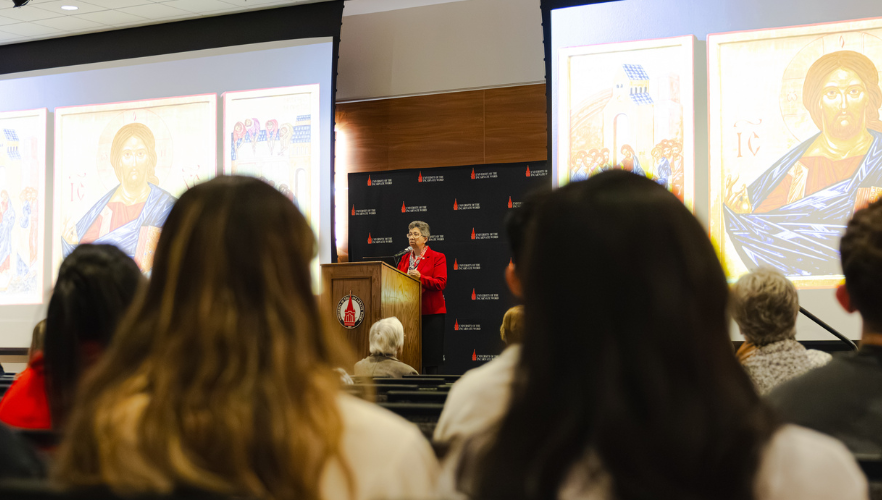
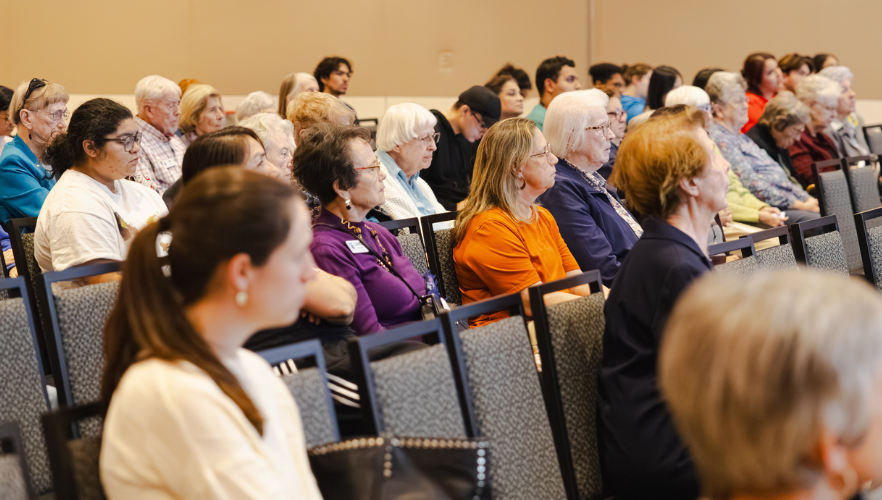
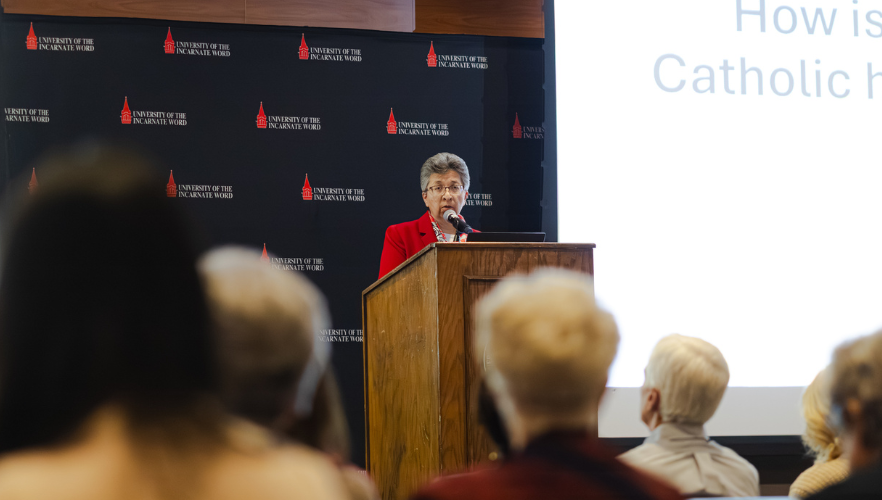
On Tuesday, Feb. 24, the University of the Incarnate Word (UIW) hosted the annual 2026 Pierre Lecture on the Broadway Campus. Since 2001, the Pierre Lecture, named after one of UIW’s founding Sisters of Charity of the Incarnate Word (CCVI) Sister Pierre Cinquin, CCVI, has brought “distinguished women scholars of religious studies to campus to address current issues relating to social justice, ecology and globalization” (uiw.edu).
This year’s guest speaker was Senior Director for Theology and Sponsorship at the Catholic Health Association and CCVI Sister, Sr. Teresa “Tere” Maya. Sr. Tere was a notably special presenter, as she previously served as councilor and congregational leader for the CCVI congregation, and was the first CCVI Sister to serve as the lecture’s guest speaker. Her presentation "Care for All: What Does 'Catholic' Mean in Healthcare?" explored the Gospel roots of Catholic health care, the call to health equity and the "Samaritan Way" of offering care with mercy and dignity.
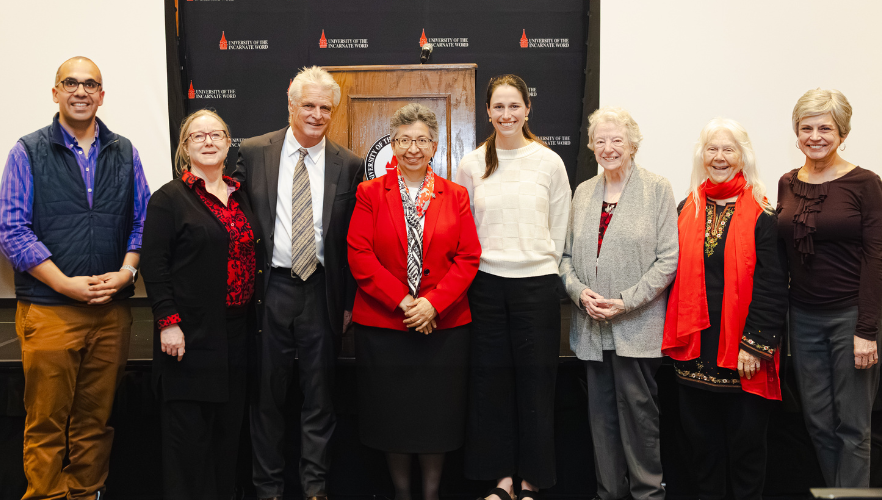
UIW students, faculty, staff, leadership and CCVI Sisters gathered in the Joeris Ballroom, to hear the wisdom and insights Sr. Tere had to offer.
“Sr. Tere has consistently confronted complacency and has urged institutional leadership to listen deeply to the marginalized,” opened Mourad Takawi, PhD, chair and assistant professor in the Department of Religious Studies. “As our University prepares future health professionals, her perspective is truly invaluable. She embodies the necessary synthesis of spiritual and physical health, reminding us that religious commitments must translate into tangible care for human recovery.”
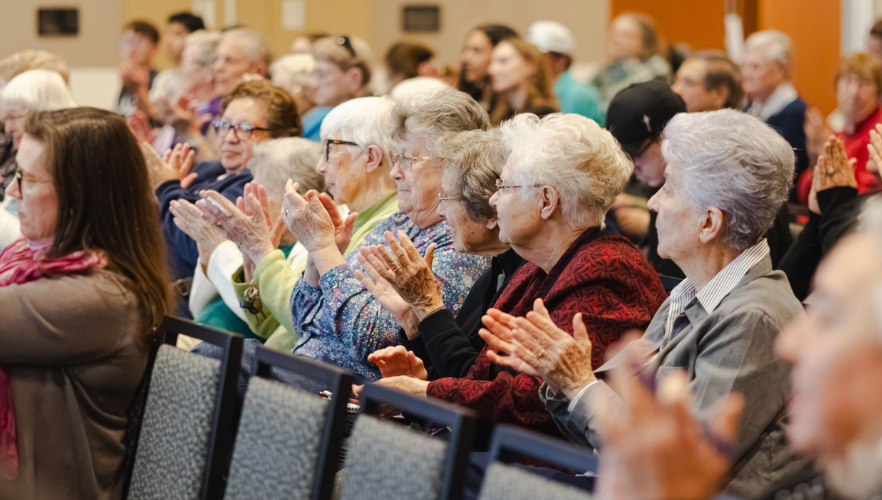
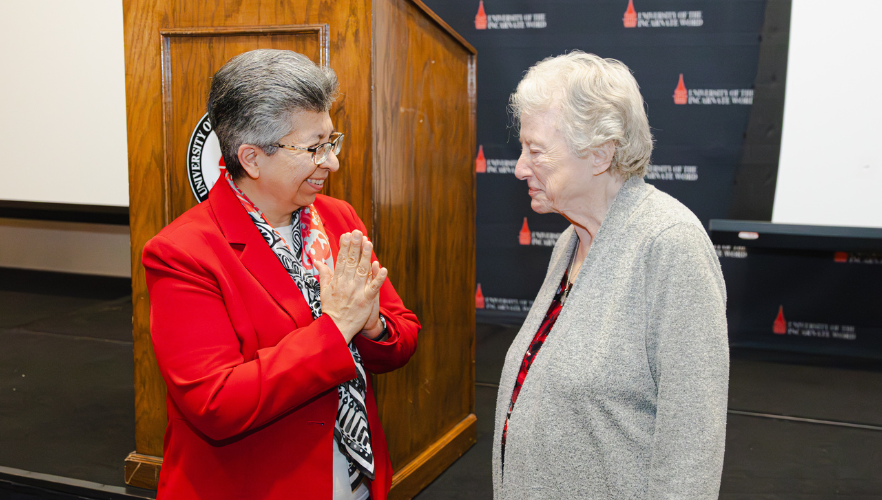
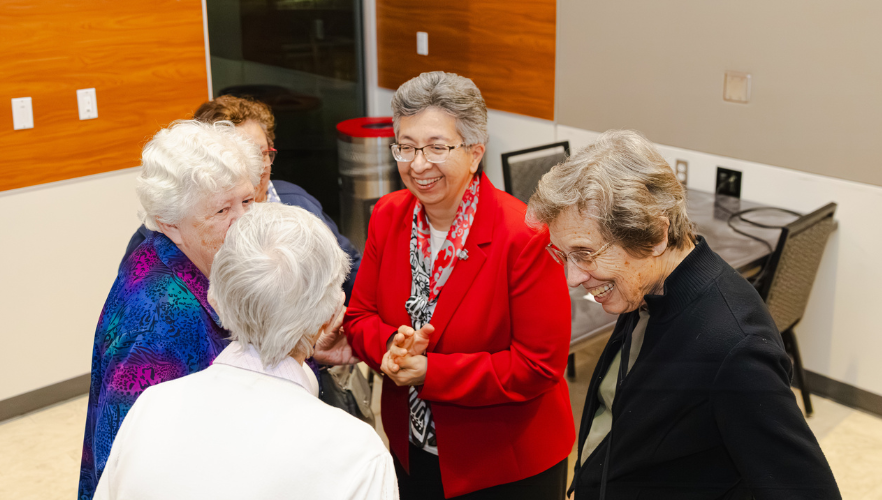
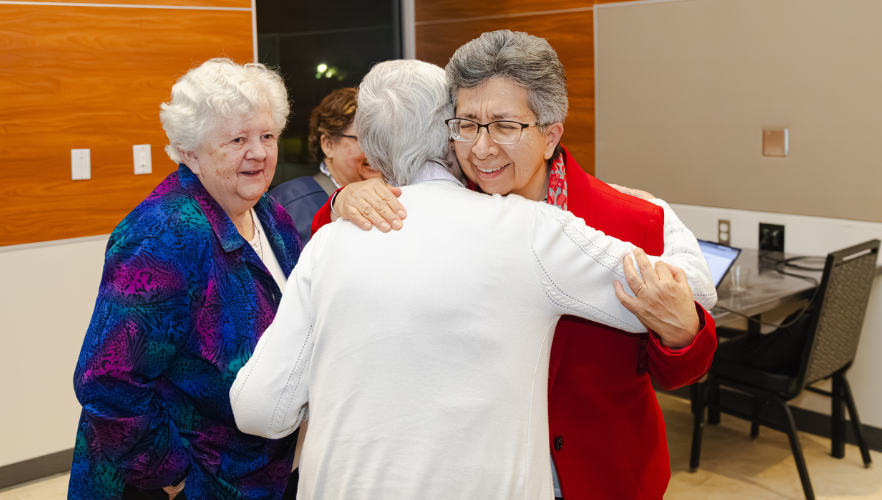
Sr. Tere was greeted with loud applause and the warm smiles of her Incarnate Word community. Looking out across the ballroom, she spotted several mentors in the crowd, Sr. Teresa Stanley, CCVI, Sr. Theresa McGrath, CCVI, Peter Maddox and others and shared how much their support has meant to her over the years. She said she wouldn’t be where she is today without their guidance and encouragement.
“It is great to be back on the UIW campus,” expressed Sr. Tere. “It's great to be in a place you're familiar with, and to see so many people that journeyed with me for many years. I'm grateful to be here as they invited me to prepare this lecture.”
Sr. Tere discussed the relevance and impact of keeping Catholicism in healthcare. To her, Catholic healthcare first began with Jesus the healer, as many of his miracles were based in healing. With a number of scriptures emphasizing the significance of restoration, it is important to remember that Catholic healthcare is given with the purpose of “extending the healing ministry of Jesus.”
“In the end, when we go back to the gospel, that (healing) was at its core,” said Sr. Tere. “The healing ministry of Jesus was integral to his accompaniment, to the salvation he preached about - to the mission of the reign of God.”
She continued to explore Catholic healthcare through the lens of three questions:
- What does care for all mean in this sense?
- How does Catholic Social Teaching ground this ministry?
- Why care for the whole person in the first place?

Her presentation continued to highlight how Catholic healthcare has been present on various occasions, seeking to providing care during some of the most vulnerable points in human history and to marginalized brothers and sisters in need. Similar to UIW’s founding CCVI Sisters, who founded San Antonio first hospital the Santa Rosa Infirmary, she recognized how many other Catholic sisters and leaders took the initiative to develop and open care centers that administered care to all who entered through their doors.
Even when faced with financial expenses and stigmatization, Catholic healthcare has a legacy of providing care to all.
“If you're true to your mission, you are delivering quality, and that's at the heart of the identity of Catholic in healthcare.”
Sr. Tere went on to explain how Catholic healthcare is being evaluated to ensure that it is fulfilling its intended mission and continues to serve as a ministry of the Church. This includes being aware of the changing times and their demands, as healthcare cannot remain stagnant if it is going to properly tend to the needs of people in present times.
“Every Catholic hospital is mandated to have a report on their community benefit and to ensure that those metrics not just stay healthy but improve over time,” noted Sr. Tere. “Catholic healthcare cannot be the same today as it was 100 years ago. There are new ways of delivering care. We need to have access to all kinds of resources to benefit the families and communities.”
Nearing the conclusion of her presentation, Sr. Tere noted how Catholic healthcare is being acknowledged in world news today, demonstrating the positive impact it continues to have in communities. Ultimately, these results are tied to a priority to care for the whole person – not just the body but also the soul.
“We now have metrics that show hospitals where the pastoral care of the person is most effective. The recuperation rates and the recovery of people improve when you care about the whole person. When you care about their story and when you care about them as a human being, health care is more effective,” concluded Sr. Tere.